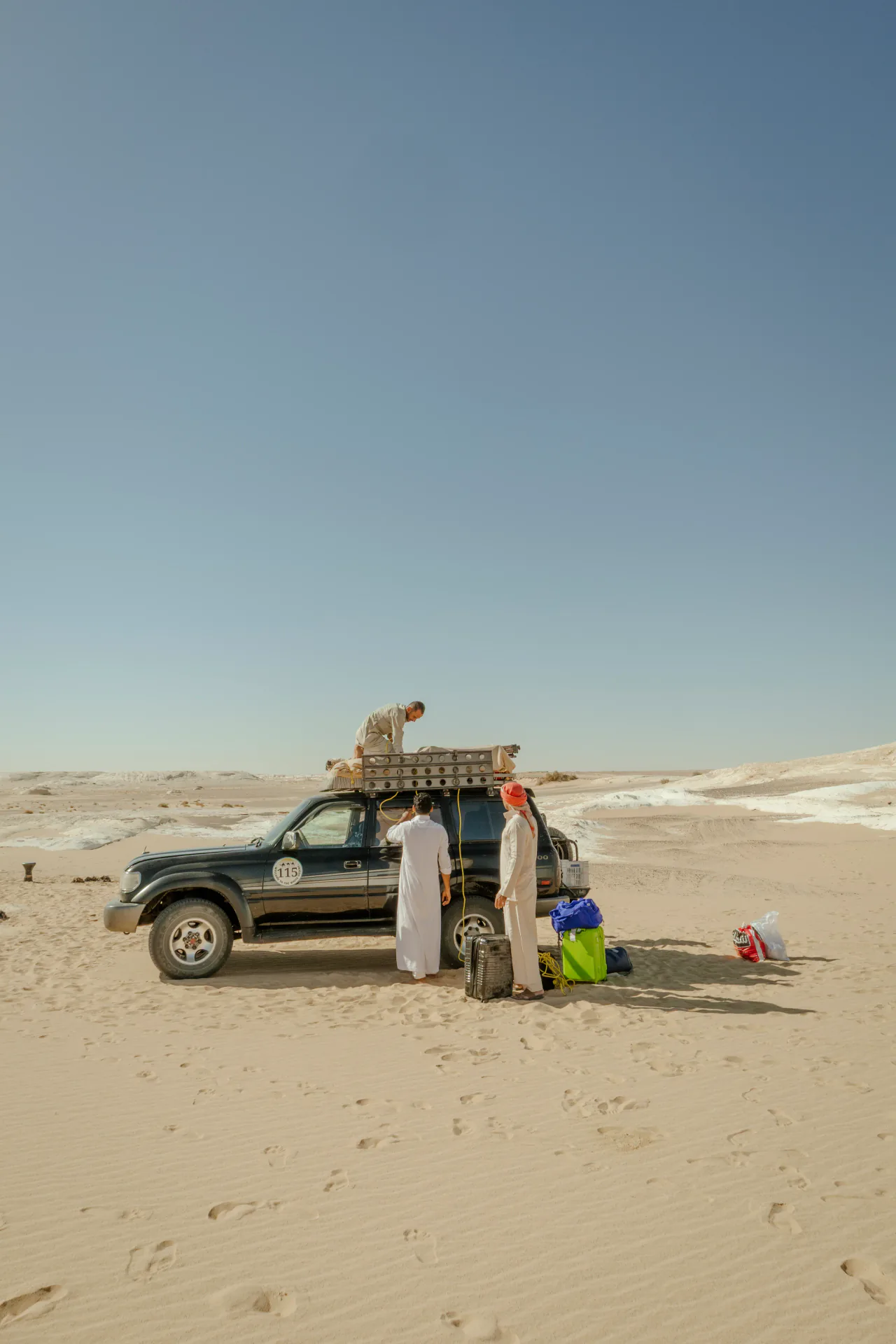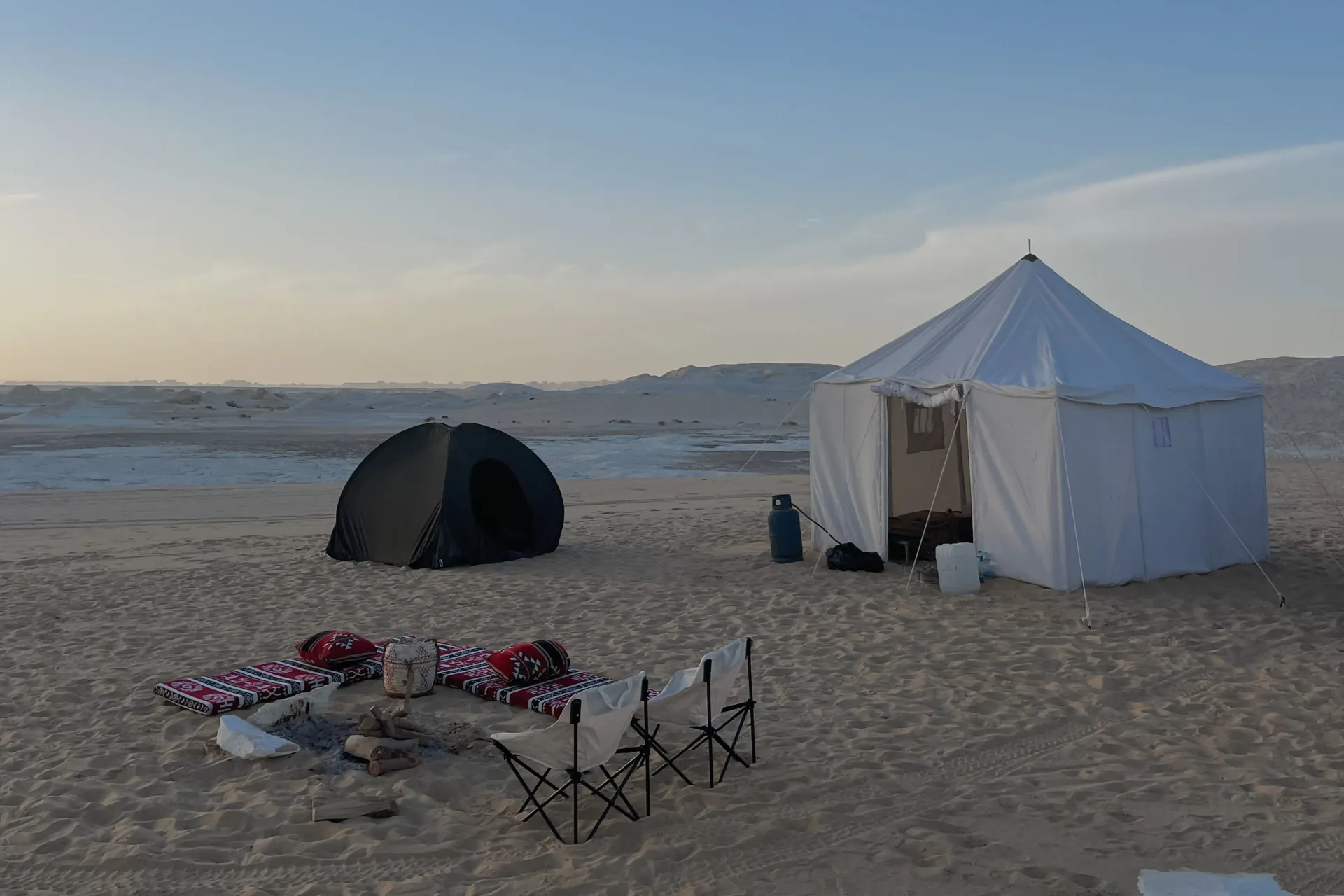
best time visit White Desert: quick answer
best time visit White Desert: The best time to visit the White Desert for a conventional safari is generally October to April. During these cooler months, travelers can spend more time walking among the white chalk formations, crossing the Black Desert, visiting Crystal Mountain, photographing Agabat, camping
The best time to visit the White Desert for a conventional safari is generally October to April.
During these cooler months, travelers can spend more time walking among the white chalk formations, crossing the Black Desert, visiting Crystal Mountain, photographing Agabat, camping and watching the night sky without the extreme heat that defines the Western Desert summer.
November through March usually provides the strongest balance for a classic trip. October and April can also work well, with warmer days and generally more comfortable nights than midwinter. December and January offer pleasant daytime exploration, but nights in an exposed desert camp can feel genuinely cold.
Summer is different.
For most travelers, an ordinary White Desert camping safari from late May through September is not a sensible choice. Outdoor activity windows become shorter, vehicles and equipment face greater thermal stress, and a basic tent does not provide meaningful protection from prolonged heat.
August 2027 creates one exceptional reason to travel: the total solar eclipse on Monday, August 2.
That does not make summer conditions easier. It changes the type of operation required.
The correct product is not “a normal White Desert tour in August.” It is a confirmed Western Desert eclipse-camp region between the White Desert and the Black Desert, inside the path of totality at a separately verified totality field, combined with White Desert experiences under a specialist heat-safety schedule.
Guests should arrive before eclipse day, use climate-controlled sleeping or recovery areas, move between activities in air-conditioned vehicles, avoid unnecessary midday exertion, and watch the eclipse from a field equipped with shade, cold water, toilets, power, medical support and controlled access.
Quick Seasonal Answer
| Season | Normal suitability | Main advantages | Main challenges |
|---|---|---|---|
| October–November | Excellent | Warm days, comfortable evenings, strong photography and camping conditions | Some days may still feel hot; seasonal demand begins increasing |
| December–February | Excellent | Mild days, long outdoor windows, strong camping and stargazing season | Cold nights, wind chill and need for proper sleeping insulation |
| March–April | Very good | Warmer nights, good activity range, attractive light | Wind and dust can affect routes, comfort and photography |
| May | Limited | Lower demand and long daylight | Rapidly increasing heat and shorter safe activity windows |
| June–September | Not recommended for normal camping | August 2027 eclipse is the exceptional draw | Extreme heat, thermal stress, high cooling and water requirements |
This table is a planning framework, not a weather forecast. Conditions vary by location, year, wind and the exact itinerary.
Why October to April Is the Normal White Desert Season
The White Desert is an outdoor journey.
Even when guests use a 4x4 vehicle, the experience depends on time outside:
- Walking around formations.
- Photographing the landscape.
- Visiting Crystal Mountain.
- Climbing a modest Black Desert viewpoint.
- Sandboarding.
- Eating outside.
- Watching sunset.
- Sitting around camp.
- Stargazing.
- Waking for sunrise.
- Packing and loading equipment.
Cooler weather expands the safe and enjoyable time available for those activities.
A three-day winter or shoulder-season itinerary can move at a relaxed pace. Guests can stop for photographs, walk farther, sit outside and wait for better light.
A summer itinerary must do the opposite. It must reduce exposure, shorten activities, create cooled recovery periods and prioritize health over the number of stops.
This is why “best time” is not merely a question of average temperature. It changes the entire rhythm of the trip.
October: The Season Begins
October is often one of the strongest months for travelers who want warmth without peak summer conditions.
Advantages
- Warm days.
- More comfortable late-afternoon activity.
- Pleasant sunset periods.
- Nights that are usually easier than midwinter for people who dislike cold.
- Strong landscape color.
- Good conditions for mixed oasis and desert itineraries.
Considerations
- Early October may still feel hot.
- Guests should continue to avoid excessive midday exertion.
- Sleeping bags and clothing should match the actual forecast.
- The season may become busier as operators restart regular departures.
October suits first-time visitors, photographers and travelers who want camping without the coldest nights.
November: One of the Best Overall Months
November appears repeatedly in current search results as a preferred month.
The balance is attractive:
- Days are generally suitable for long excursions.
- Nights are cool enough for camping atmosphere.
- The Sun is lower than in summer, improving landscape shadows.
- Outdoor meals and camp time are more comfortable.
- Activity schedules require fewer heat-related restrictions.
November is especially suitable for:
- Three- or four-day routes.
- Formation walks.
- Sandboarding.
- Photography.
- Stargazing.
- Families comfortable with simple camping.
- Travelers combining Cairo and the Western Desert.
Demand may be higher, so vehicles, guides and private camps should be reserved early.
December: Excellent Days, Cold Nights
December can produce some of the most enjoyable daytime conditions.
The main surprise is nighttime cold.
A city weather app may not communicate how cold an exposed camp feels when:
- Wind moves across open ground.
- Guests remain outside after dinner.
- The sleeping mat provides poor insulation.
- Clothing becomes damp with sweat.
- A traveler has only a light jacket.
- Sunrise requires waking before the air warms.
A proper winter setup should include:
- An insulated sleeping mat.
- A sleeping bag suited to the expected conditions.
- Clean dry sleep clothing.
- Warm socks.
- A hat.
- A wind-resistant layer.
- Extra blankets where appropriate.
- A tent or shelter in good condition.
Cold does not make December a bad month. It makes preparation important.
January: Coolest-Night Planning
January is an excellent month for guests who prioritize long daytime exploration and do not mind cold camp nights.
Possible strengths:
- Comfortable hiking and walking.
- Lower heat stress.
- Clear, crisp-feeling mornings.
- Good conditions for extended photography.
- Strong contrast between warm sunlight and cool shade.
Possible challenges:
- Cold before sunrise.
- Wind chill.
- Slow warming after waking.
- Battery performance in cold conditions.
- Greater discomfort for guests with poor circulation.
- Need for more bedding.
Older travelers or families may prefer an oasis hotel night combined with a day excursion rather than a very simple mobile camp.
February: Strong Balance
February often combines mild days with nights that remain cool but may feel more manageable than the coldest part of winter.
It is suitable for:
- First-time camping.
- Photography.
- Long 4x4 routes.
- Oasis extensions.
- Walking.
- Stargazing.
- Travelers who want winter conditions without holiday-period demand.
Weather remains variable. Warm clothing is still necessary.
March: Warmer Days and Wind Awareness
March can be one of the best months for a balanced trip.
Advantages:
- Warmer nights.
- Comfortable days.
- Longer daylight.
- Strong activity range.
- Good camping conditions.
The main operational concern is wind and dust.
Spring conditions can affect:
- Visibility.
- Photography.
- Vehicle speed.
- Camp placement.
- Tent stability.
- Eye comfort.
- Respiratory conditions.
- Sandboarding.
- Outdoor meals.
- Drone permission and safety.
A flexible local team can change the order of activities, select a more sheltered camp or reduce exposure when wind rises.
No operator should guarantee dust-free conditions.
April: Warm Shoulder Season
April can still be a good time to visit, especially in the earlier part of the month.
Travelers can expect a warmer experience than winter.
Advantages:
- More comfortable nights.
- Good sunrise and sunset periods.
- Less need for heavy winter clothing.
- Strong conditions for short itineraries.
Challenges:
- Midday heat becomes more important.
- Activity timing should shift earlier and later.
- Wind or dust remains possible.
- Walking and sandboarding may need shorter sessions.
- Water planning becomes more important.
April is a transition month. The exact date and forecast matter.
May: The Comfort Window Narrows
May is not automatically impossible, but it is no longer the easy default.
The day becomes harder to use efficiently.
A safe itinerary may require:
- Very early starts.
- Longer shaded lunch periods.
- Shorter walks.
- Less sandboarding.
- More time in an air-conditioned vehicle.
- Reduced camp activity before sunset.
- Greater water and cooling capacity.
Travelers who are heat-sensitive, older, very young or managing medical conditions should consider a cooler month.
A low price or quiet landscape does not cancel the thermal risk.
June and July: Normal Safaris Become Difficult
June and July are unsuitable for ordinary multi-hour outdoor exploration for most international visitors.
The problem is not only the maximum daytime reading.
Operational stress accumulates across:
- The road journey.
- Vehicle loading.
- Tire and engine temperature.
- Cooking.
- Camp setup.
- Water storage.
- Refrigeration.
- Medication.
- Batteries.
- Electronics.
- Sleep quality.
- Staff exposure.
- Medical response time.
A standard fabric tent may provide shade, but it can still become dangerously hot. Opening the tent improves airflow but does not create air conditioning.
Normal summer camping should never be presented as “the same trip with fewer crowds.”
August 2027: Why This Summer Is Different
The total solar eclipse makes August 2027 exceptional.
NASA identifies the August 2 event as a total eclipse with a maximum duration of approximately 6 minutes 23.2 seconds. The path crosses Egypt, and representative Bahariya-area coordinates lie inside totality.
That astronomical opportunity is rare.
The environmental conditions remain demanding.
The correct conclusion is not:
Summer has become a good normal season.
It is:
A rare event justifies a specialist summer operation that would not be necessary for an ordinary safari.
What Must Change
A winter safari may rely on:
- Simple tents.
- Outdoor meals.
- Long daytime drives.
- Campfire evenings.
- Limited electricity.
- Basic toilets.
- Passive shade.
An August eclipse operation requires:
- Climate-controlled sleeping or rest spaces.
- Reliable generators or power systems.
- Backup power.
- Cold-water storage.
- Refrigeration.
- Structured hydration.
- Strong shade.
- Medical assessment and response.
- Heat-illness protocols.
- Vehicle redundancy.
- Communication systems.
- Sanitation matched to guest capacity.
- Safe medication storage.
- A short route between recovery areas and the viewing field.
- Carefully scheduled White Desert activities.
The Eclipse Field and the White Desert Route Are Different
The famous White Desert formations should not automatically be described as the viewing location.
The operational model should use:
- A separately verified field inside totality near Bahariya.
- A managed eclipse camp close to that field.
- White Desert and Black Desert experiences before or after eclipse day.
- A route adjusted to permits, heat and guest ability.
This distinction improves both astronomy and safety.
How the Eclipse-Day Schedule Should Work
The eclipse occurs around midday, when heat exposure is most important.
A responsible day should prioritize:
- Breakfast and hydration.
- Medical readiness.
- Equipment checks.
- Safe filtered viewing.
- Shade during partial phases.
- Minimal unnecessary walking.
- Clear contact announcements.
- Controlled removal and replacement of eclipse glasses.
- Cold water and toilets close to the field.
- Recovery after totality.
- Staged departure rather than an immediate rush.
Guests should not combine eclipse morning with:
- A long Cairo transfer.
- Intensive sandboarding.
- A major hike.
- Repeated vehicle changes.
- A distant excursion.
- An untested camp arrival.
The event cannot be postponed because a group is late.
Why an Air-Conditioned Camp Matters
Air conditioning is not a luxury label in this context. It is part of the risk-control system.
A credible camp description should state:
- Which spaces are cooled.
- Whether sleeping tents, lounges or both are climate controlled.
- Cooling capacity.
- Guest capacity.
- Power source.
- Backup power.
- Operating hours.
- What happens during equipment failure.
- Distance to the open viewing field.
- Medical and evacuation arrangements.
The viewing field itself must remain open to the sky.
Cooling allows guests to:
- Rest before first contact.
- Reduce cumulative heat exposure.
- Store medication appropriately.
- Recover after outdoor periods.
- Sleep more effectively.
- Prepare cameras and equipment.
- Avoid spending the entire partial phase in direct sun.
Read Inside the Fully Air-Conditioned 2027 Eclipse Camp for the full facility explanation.
Best Season for Photography
Landscape Photography
October through April generally provides more comfortable conditions and lower Sun angles than summer.
Useful periods:
- Sunrise.
- Early morning.
- Late afternoon.
- Sunset.
- Blue hour.
- Night.
Night Photography
The best date depends on:
- Moon phase.
- Cloud.
- Dust.
- Wind.
- Camp lighting.
- Milky Way position.
- Equipment.
“Winter” alone does not guarantee a visible Milky Way composition.
Eclipse Photography
August 2, 2027 is fixed.
Photographers must prepare for:
- A very high Sun.
- Extreme heat.
- Front-mounted solar filters.
- Near-vertical tripod movement.
- Battery protection.
- Tripod separation.
- Shade that does not obstruct the Sun.
- A rehearsed filter sequence.
- Multiple exposure settings during totality.
The camp’s operational quality matters more than ordinary seasonal preference.
Best Season for Stargazing
Cooler months usually make long nighttime sessions more comfortable.
However, sky quality depends on:
- Moonlight.
- Cloud.
- Dust.
- Humidity.
- Nearby camp lights.
- Vehicle headlights.
- Wind.
- The observer’s dark adaptation.
A responsible camp should reduce unnecessary white light and provide safe marked routes between tents and toilets.
For August 2027, stargazing is a valuable extra experience, but it is not the reason to accept unsafe daytime conditions.
Best Time for Families
Families generally benefit from:
- October, November, February, March or early April.
- Moderate days.
- Manageable nights.
- Shorter walking options.
- Reliable toilets.
- Private or small-group vehicles.
- Clear child supervision.
December and January can work when bedding and clothing are adequate.
August 2027 requires:
- Climate-controlled accommodation.
- Strict hydration.
- Reduced exposure.
- Child-specific medical planning.
- Appropriate vehicle seating.
- Active eclipse-glasses supervision.
- A realistic minimum age policy.
Review the child policy before booking.
Best Time for Older Travelers
Older travelers are not one group.
The best season depends on:
- Heat tolerance.
- Circulation.
- Heart or respiratory conditions.
- Mobility.
- Medication.
- Sleep needs.
- Toilet requirements.
- Ability to enter 4x4 vehicles.
Cooler shoulder months may be easier than both extreme heat and the coldest winter nights.
For August 2027, suitability should be assessed individually. The presence of air conditioning does not remove all heat risk.
What to Pack by Season
October–November
- Breathable daytime clothing.
- Long sleeves.
- Sun hat.
- Closed walking shoes.
- Light or medium evening layer.
- Dust protection.
- Personal medication.
December–February
- Warm jacket.
- Thermal or insulating layers.
- Warm sleep clothes.
- Hat and socks.
- Wind-resistant outer layer.
- Proper sleeping bag and insulated mat.
- Daytime sun protection.
March–April
- Layered clothing.
- Wind and dust protection.
- Sunglasses.
- Light jacket.
- Breathable daytime wear.
- Extra water.
August 2027
- Lightweight breathable long sleeves.
- Wide-brimmed hat.
- UV protection.
- Closed footwear.
- Personal bottle.
- Oral rehydration or electrolytes when medically appropriate.
- Dust protection.
- Medication with a heat-safe storage plan.
- Minimal heavy hand luggage at the field.
- Approved eclipse glasses.
- Equipment covers.
- A written medical-information card where appropriate.
Packing does not replace infrastructure.
Weather Risks in Every Season
No month is risk-free.
Possible issues include:
- Wind.
- Blowing dust.
- Reduced visibility.
- High cloud.
- Unexpected heat.
- Cold nights.
- Road changes.
- Sand accumulation.
- Equipment failure.
- Local storms.
The White Desert receives very little rainfall, but “desert” does not mean weather can be guaranteed.
The operator should have:
- Forecast monitoring.
- Route flexibility.
- Vehicle backup.
- Shelter.
- Communications.
- Medical support.
- A clear cancellation or modification policy.
How Many Days Should You Book?
Two Days
Best for:
- A focused experience.
- Limited leave.
- Travelers prioritizing the eclipse.
Limitations:
- Less route flexibility.
- Less recovery time.
- Fewer White Desert activities.
Three Days
Best for:
- A balanced eclipse and desert program.
- Camp orientation.
- Selected White Desert experiences.
- Better pacing.
Four Days
Best for:
- Photographers.
- Families needing rest.
- Broader oasis and desert experiences.
- More contingency space.
- Reduced pressure around eclipse day.
Compare the 2-, 3- and 4-day eclipse packages.
Common Seasonal Planning Mistakes
Assuming Desert Nights Are Always Warm
Winter nights can feel cold.
Choosing by Price Alone
An off-season discount does not make conditions suitable.
Treating October and April Like Midwinter
They can be considerably warmer.
Ignoring Wind in Spring
Dust can change activities and photography.
Believing Clear Sky Is Guaranteed
It is not.
Using a Normal Tent in August
Shade alone is insufficient.
Scheduling Long Activities at Midday
The activity window must follow the season.
Arriving from Cairo on Eclipse Morning
The risk is unnecessary.
Calling Every White Desert Site the Eclipse Field
The coordinate must be verified separately.
Assuming Air Conditioning Solves Everything
Transport, water, power, medical response and field design still matter.
Questions to Ask Before Booking
- What season is the itinerary designed for?
- What were the reasons for choosing these dates?
- Where will guests sleep?
- What sleeping equipment is supplied?
- Which spaces are climate controlled?
- Is power backed up?
- How much shade is available?
- Is cold drinking water continuously available?
- What activities happen at midday?
- Which activities can be canceled because of heat or wind?
- What is the medical plan?
- How are medications stored?
- What toilets are provided?
- What is the vehicle-backup plan?
- Are permits included?
- Where is the eclipse field?
- How far is it from camp?
- Is the field securely inside totality?
- Are eclipse glasses included?
- What is the child policy?
- Are older travelers assessed individually?
- What happens if dust or cloud affects visibility?
- Can weather be guaranteed? The correct answer is no.
- What are the site-change terms?
- What is the cancellation policy?
Frequently Asked Questions
What is the best time to visit the White Desert?
October to April is generally the best period for a conventional safari.
What are the best individual months?
November through March is the core season. October and April are useful warmer shoulder months.
Is the White Desert cold in winter?
Days can be mild, while exposed nights can feel cold. Proper sleeping insulation and warm layers are important.
Is December a good month?
Yes, especially for daytime exploration, camping and photography, provided guests prepare for cold nights.
Is January too cold?
Not necessarily. It is excellent for daytime activity, but camp bedding and clothing must be suitable.
Is March a good month?
Yes. It offers warm days and manageable nights, though wind and dust can occur.
Is April too hot?
April can still work, particularly earlier in the month, but midday heat becomes more important.
Can I visit in May?
Possibly with a carefully timed itinerary, but the comfortable activity window is smaller.
Can I visit the White Desert in summer?
Normal summer camping is not recommended for most travelers.
Why visit in August 2027?
The August 2 total solar eclipse is an exceptional event that justifies a specialist operation.
Is a standard safari camp suitable for the eclipse?
No. The August event requires climate control, shade, water, power, sanitation, medical planning and vehicle backup.
Will the eclipse camp be inside the famous formations?
Not automatically. The viewing field should be separately verified inside totality.
Is the camp air-conditioned?
The final package should specify which spaces are cooled and how power is backed up.
Can weather be guaranteed?
No.
Which season is best for photography?
The cooler months are generally strongest for normal landscape photography. Eclipse photography is fixed to August 2, 2027.
Which season is best for stargazing?
Cooler months are comfortable, but Moon phase, dust, cloud and camp lighting matter.
Is the trip suitable for children?
It can be in cooler months and under a specialist August plan, subject to age, health, supervision and the child policy.
Can older travelers visit?
Yes when transport, walking, toilets, sleeping and temperature control match individual needs.
How many days should I book for the eclipse?
Three or four days often provide better pacing and contingency than a rushed two-day trip.
How do I reserve?
Review the 2027 eclipse packages or check availability.
Final Takeaway
For a normal White Desert safari, choose October to April.
November through March provides the strongest overall balance. October and April are warmer alternatives. Winter offers excellent days and cold nights. Spring offers comfortable travel with possible wind and dust.
Summer is not the normal season.
August 2027 is different only because the total solar eclipse creates an exceptional reason to travel. The heat remains real, and the solution is not to ignore it.
The safe commercial route is a confirmed Western Desert eclipse-camp region between the White Desert and the Black Desert, inside the path of totality, close to a separately verified totality field, with climate-controlled recovery areas and White Desert experiences scheduled before or after eclipse day.
Review the fully air-conditioned eclipse camp, compare the 2027 eclipse packages, or check availability.
Authoritative planning reference
Use NASA 2027 eclipse path data as a primary reference, then verify local circumstances for the exact location.